Supplier product photography. Confirm your final color with a physical sample.
Emseal
Thermaflex® TM System
QXO product C-824245 · 1 options
Selected: Thermaflex® TM System
QXO SKU 824245 · Product number EMLTFTM15DW
Free, no-obligation quote. Our team confirms local availability, required quantities, compatible components, and installation pricing.
Selected option specifications
- Dimension
- 1.5 in
- Item Weight
- 1.5
- Algae Resistance
- No
About this product
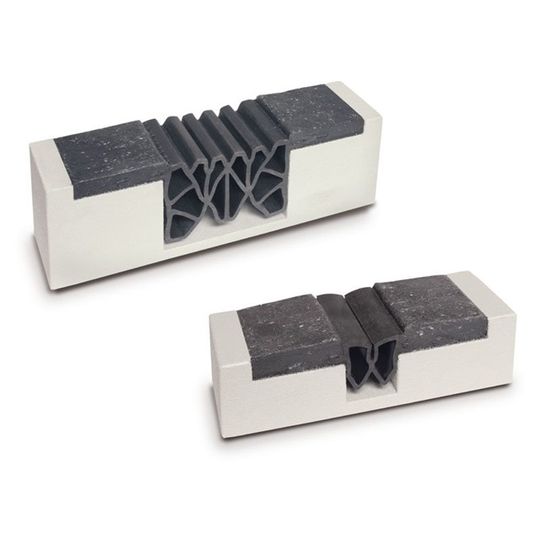
Thermaflex® consists of extruded thermoplastic vulcanizate (TPV) rubber sealing gland with punched flanges embedded in a high-strength, flexible, impact-absorbing elastomeric concrete nosing (Emcrete). The TPV sealing glands are heat-weldable, making transitions through changes in direction and plane not only practical but watertight. The elastomeric concrete is composed of two-part polyurethane reinforced with silica sand and fiberglass. The aggregate provides compressive strength while preserving flexibility. The system is mounted in blockouts on each side of the joint-gap. The sealing gland is placed in the joint-gap and the blockouts are filled with the elastomeric concrete which encapsulates the f langes. The nosing material flows through holes punched in the flanges thereby forming a row of "pillars" for secure fastening and load bearing. The system becomes integral with the deck as the nosing material develops a bond to the concrete. TM Series Advantages: Latest in gland design evolution. Greater movement range than multi-cell glands for comparable joint sizes while retaining sealing redundancy. Handles vertical differential deflection movement typical of precast-tee construction by "hinging" on reinforced center. Finite Element Analysis (FEA)-developed section having generous movement capability and low-stress allows use of a higher durometer grade of thermoplastic than is typically used in multicell glands. This results in enhanced abrasion, flex-fatigue, and point-load resistance. Primary and secondary barriers provide double-barrier sealing. Uncomplicated internal geometry facilitates properly welded transitions and terminations.